


 January 2026 • Note 79 •
France and Europeans Confronting the New Defense Challenge
After eighty years of relative peace, Europe is facing the abrupt return of high-intensity warfare, the Russian threat, and weakening American security guarantees. In response, an unprecedented rearmament effort—unmatched since World War II—is mobilizing hundreds of billions of euros. Yet despite rising budgets and a growing number of announced procurement plans, this effort remains fragmented, slow, and insufficiently agile. The issue is no longer only to buy more, but to buy better, at a time of major technological disruption—most notably the rise of drones and artificial intelligence. New Defense captures this profound shift: a more agile, innovative, and integrated defense model, now an essential condition for European strategic autonomy.
Ukraine: The Most Technological Conflict of All Time
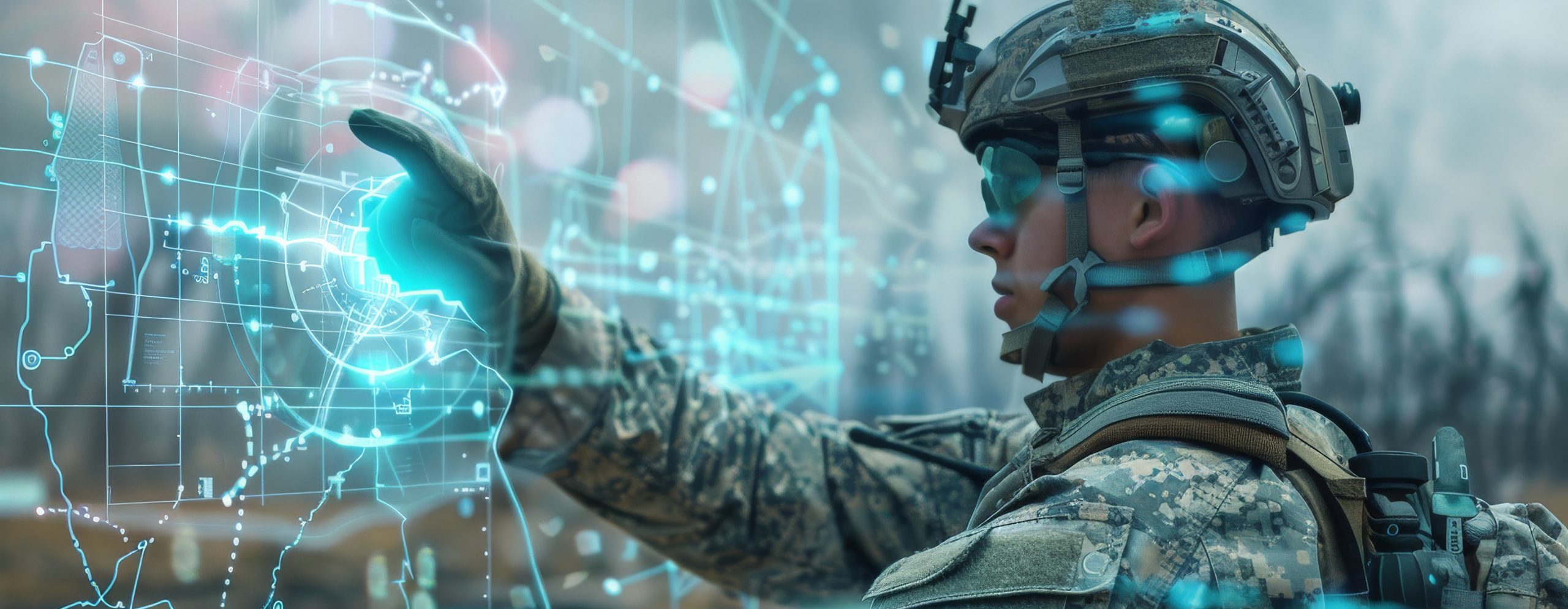
The war in Ukraine has been defined by the decisive entry of civilian innovations onto the battlefield. It is a full-scale laboratory for New Defense, where speed of adaptation, agility, and technological integration outweigh traditional military templates. Startups, commercial satellites, artificial intelligence, digital platforms, and civilian drones converted into combat systems have fundamentally reshaped how operations are conducted. Drone warfare, electronic jamming, large-scale data exploitation, and automation all illustrate this turning point. Beyond conventional weapons, strategic advantage now rests on the ability to rapidly integrate dual-use technologies, adapt them, and produce them at scale. The Ukrainian conflict shows that tomorrow’s military superiority will depend as much on software innovation as on industrial capacity.
2016–2026: A Decade to Respond to the Risk of Western Technological Decline
China’s technological rise triggered, as early as the 2010s, fears of a strategic gap opening in the West. Facing this risk, the United States launched a major shift by seeking to bring civilian innovation into the core of its military apparatus, notably through the creation of the Defense Innovation Unit (DIU) in 2016. This approach marks the emergence of New Defense: accelerating the adoption of dual-use technologies from startups to offset the inertia of traditional weapons programs. In France, this awakening led to the creation of the Defense Innovation Agency (AID). Russia’s 2022 invasion of Ukraine confirmed the urgency of this pivot, exposing Europe’s lack of preparedness and its technological dependence. Drones, artificial intelligence, electronic warfare—and soon quantum technologies—impose a new strategic tempo. The ability to integrate these innovations quickly is now becoming the decisive factor in military power.
New Defense Versus the Structural Inertia of Defense Markets and Institutions
In France and across Europe, integrating New Defense runs into strong institutional and industrial resistance. The American DIU experience shows how administrative drag and the dominance of major primes can slow the rapid adoption of startup-driven innovations. In France, an acquisition system dominated by the DGA and traditional contractors struggles to integrate essential dual-use technologies—particularly in software, drones, and artificial intelligence. Despite the creation of the AID, funding remains limited and true scaling remains rare. The central obstacle is still the lack of sufficient private and public financing.

Seven Policy Recommendations
France—and Europe as a whole—must fully integrate New Defense into their rearmament effort. Despite significant industrial and technological potential, dual-use innovations are still constrained by bureaucracy and resistance from large incumbents. To foster new champions, we offer seven recommendations: ring-fence dedicated budget flows; dramatically accelerate procurement; allow frontline units to purchase certain capabilities directly; prioritize genuine competition; secure large, firm orders that enable scaling; ease EU AI regulation so as not to stifle research or push startups abroad; tighten oversight of prime contractors’ margins; and strengthen transparency in defense procurement through enhanced parliamentary scrutiny. The state remains the only actor capable of removing these constraints. The question is whether it can move fast—and decisively.
•
The Note
•
The author

Gilles Delafon is an Associate Research Fellow at the Thomas More Institute. A correspondent in Beirut during the Lebanese civil war from 1984 to 1988, he is the author of Beirut, the Soldiers of Islam (1989), one of the first books to highlight the emerging Islamist threat. A senior reporter and editorial writer for Le Journal du Dimanche from 1989 to 2008, he covered major crises in the Middle East, including both Iraq wars and the Israeli–Palestinian peace process. He subsequently served as Head of News at Canal+ from 2008 to 2016. He is also the author of The Reign of Contempt: Nicolas Sarkozy and the Diplomats, 2007–2011 (2012). A graduate of Columbia University (New York), he founded the consulting firm Lord Jim Consulting in 2016, where he currently serves as President. He joined the research team of the Thomas More Institute in September 2023 • |